
We need to discuss why "Good Enough" Internet is Costing Your Rental Property 5-Star Reviews
So this blog post took longer to suss out than normal. We had arrived at our Airbnb for a big family get-together down on Phillip Island, and one of the first comments I get - before the bags are even out of the car - is "the Internet is unusably slow."
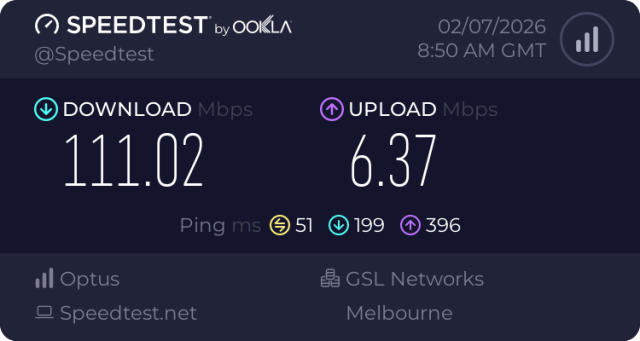
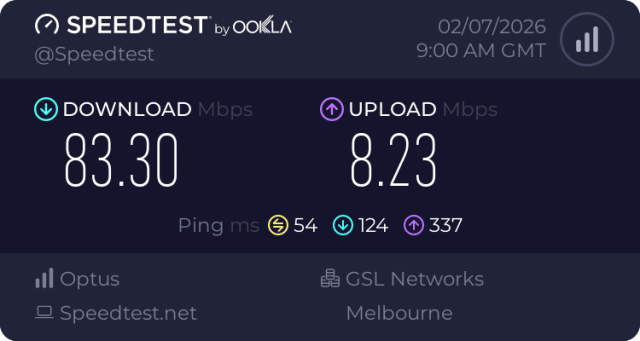
I fire up speed test and - Ouch.
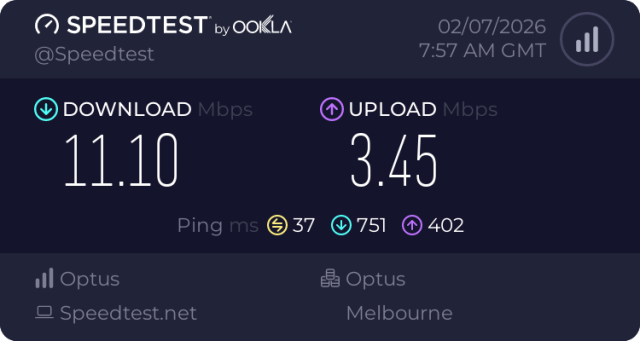
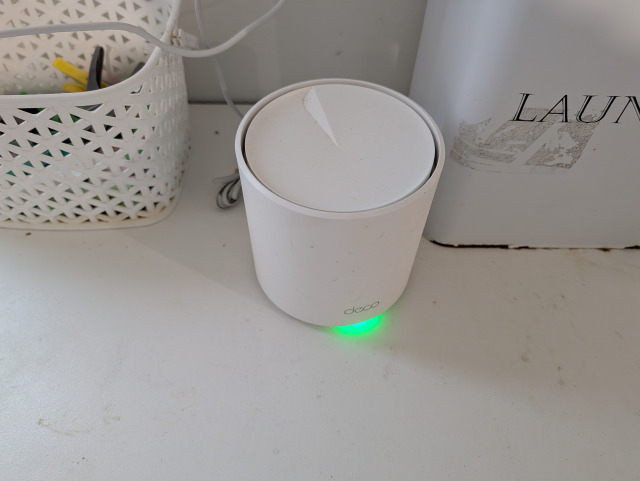
I can't help myself. I start walking around the property and notice Mesh Access Points (APs) everywhere. At first, I think, yep, it's a property out in regional Victoria, so the internet is probably average to begin with and we’ve got Mesh trying to pull too much weight. I've already written about the problems with mesh systems here, so I assumed it would be a clear problem and a clear fix, likely just bypassing the existing routers with my own travel router. I figured I’d use it as a quick real-world example in a future post.
Boy, was I wrong; well, except for the blog part.
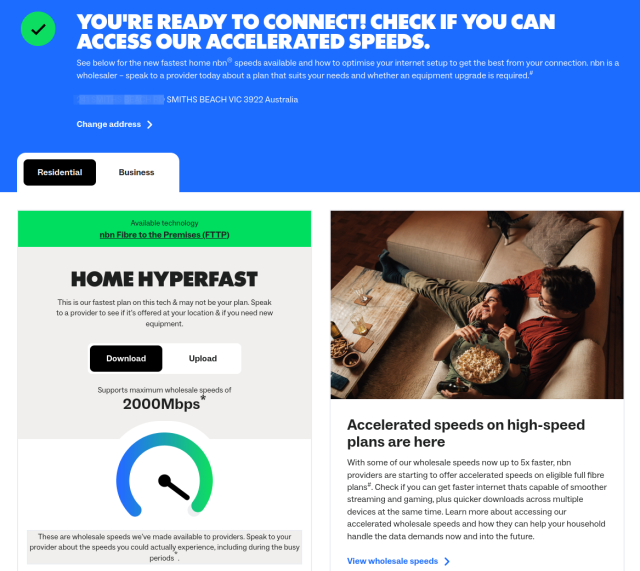
I couldn't find an obvious internet connection in the house. I checked the nbnco website and confirmed the property has Fibre to the Premises (FTTP). I checked the house again and again. I looked for the NBN Utility Box on the outside and the Connection Box on the inside, but I couldn't see where the fibre entered.
Eventually, I started taking a closer look at the mesh units and made a discovery that actually made my heart sink for the owner: the "odd one out" had a SIM card in it.
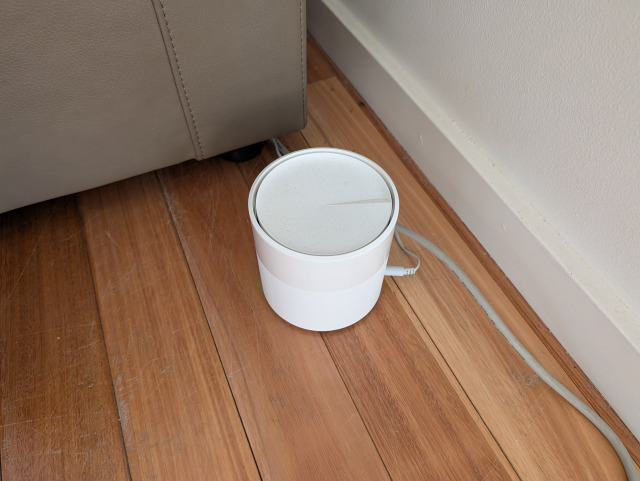
What on earth - A SIM card.
I went back and checked the nbnco website again. How did I miss that? The property isn't actually connected; it is listed as "ready to connect." In a house designed for up to 16 guests, the owner was relying on a 4G/5G mobile broadband router. The fact that the property has FTTP available the gold standard of Australian internet but isn't using it, is a massive missed opportunity.
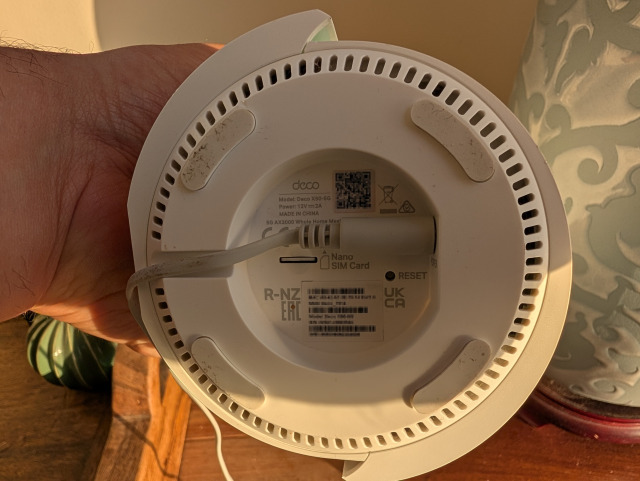
When I first arrived, the connection was consistently sitting at a miserable 11Mbps. After realising we had a 5G unit and power-cycling it, the speed jumped back up to ~100Mbps. But for a house full of people, that 100Mbps is fragile. Let’s explore why 5G is a risky bet for a rental property.
Why 5G Fails Under Pressure
While 5G is marketed as a "fibre replacement," the reality is different, especially when you have a house full of guests. Let's discuss how it can go so wrong.
Bufferbloat
Speed is only half the story. You can have a "fast" connection that still feels broken. This is often due to Bufferbloat.
Think of your router like a kitchen sink and the ISP connection as the drain. When 16 guests are all clicking links, streaming videos, and joining calls at once, data pours into the "sink" (the router). If the "drain" (the 5G connection) is too narrow or becomes temporarily blocked, the sink fills up. The router tries to be helpful by "buffering" that data in its memory, but this creates a massive traffic jam. The result? Even if the water is eventually moving, it’s overflowing and creating a mess. Your guests experience this as "lag" - where a website takes 10 seconds to even start loading. This can happen on any internet connection but given 5G's inconsistency (see below) it's more likely to happen.
Now there's a massive caveat: in this context, Bufferbloat is more of an issue for upload traffic. Think of returning to your accommodation and suddenly everyone's phone connects to Wifi and starts trying to backup photos and video. Counterintuitively once upload fills up it impacts download. When you download data via a network connection, your device (laptop, phone, tablet, etc..) sends "ACK" (or acknowledgement) packets. If these are getting "stuck in the sink" due to buffer bloat suddenly your downloads grind to a halt too.
Band Switching
Why did our connection drop to 11Mbps until I rebooted it? It's most likely we were contending with Band Switching. 5G relies on high-frequency bands (like 3.5GHz) to deliver its high speeds. The problem is, these high frequencies are delicate; they are easily blocked by heavy rain, thick walls, or even just a particularly leafy tree.
When the 5G signal weakens, the router "downshifts" to a much slower 4G or low-frequency band to keep the connection alive. If you've ever had your car enter "limp home mode" you'll know the feeling. The problem is, once the router downshifts, it often stays there. It requires a manual reboot to force a fresh "handshake" with the tower to get back onto the faster 5G speeds.
Thermal Throttling in the Australian Sun
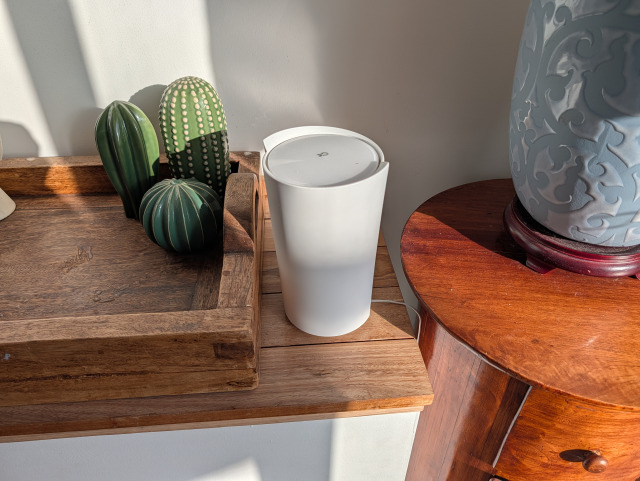
We often see routers placed on windowsills to get a better signal. In the Australian summer, this is a recipe for disaster. 5G modems are high-performance computers that generate significant internal heat. If they get too hot - especially in a sunny window - the modem will intentionally slow down (throttle) its processing speed to prevent its internal chips from melting. Only one Mesh unit was placed close to a window, the one with the SIM card - it's the best place to get a strong mobile signal but it's also the best place to cook the unit.
IP Stalls and Pizza
Unlike NBN FTTP, which is a dedicated signal - light riding on a strand of glass - sent directly to your house, 5G is a shared resource. I like to think of the 5G bandwidth as a pizza. If a busload of tourists arrives at a nearby lookout, or a local event happens down the road, everyone connects to the same tower. Your share of that pizza gets way smaller. Today the beach next to the house we're staying at was completely jam-packed to the point of the carpark overflowing.

Why Your Internet is Your Best Marketing Tool
In 2026, providing poor internet isn't just a nuisance; it's a threat to your business model. This is supported by significant industry research into guest expectations and connectivity standards (which you can read more about in this research paper). FULL DISCLOSURE - USE OF AI: The link is to an automatically generated research paper created using Google's Gemini. Based on my review of the paper it seems to be spot-on, but it may contain hallucinations.
So what are the issues?
The 'Star Rating' Risk
A guest can't fix a 5G tower. They can't move the house closer to the signal. If the Wi-Fi fails during their stay, they feel helpless and frustrated. They won't write a review about the lovely deck or the nice linen; they’ll write a 3-star review about how they couldn't watch Netflix or finish a work email. For a rental owner, those reviews are permanent and expensive.
Capturing the 'Digital Nomad' Market
The way we travel has changed. Remote workers and "work-from-anywhere" professionals now specifically filter listings for "Fibre" or "FTTP." They need to know that their 9:00 AM meeting won't drop out. In today's market, a screenshot of a Speedtest showing a low-latency, high-speed fibre connection is a marketing "must-have" that allows you to charge a premium. In my own case, I'm saved by the fact I'm skeptical of everyone's internet connection and bring a high speed connection with me.
Reliability: "Set and Forget" vs. "Reboot and Pray"
The biggest difference for a property owner is peace of mind. FTTP is "set and forget." Once that fibre is in the wall, it works rain or shine, summer or winter. 5G, on the other hand, is "reboot and pray." If you aren't at the property to power-cycle that router when it hits "limp home mode," your guests are the ones suffering—and they'll let you know about it.
Don't Leave Your Connection to Chance
In my own case, I’ll be working here this Monday - and as I mentioned above, thank goodness I brought my own backup internet with me. But most guests don't travel with a networking kit in their travel gear. They are dependent on the internet you provide for everything from streaming a movie after a long day at the beach to sharing photos with family and handling remote work.
If your property is "Ready to Connect" for FTTP, making that jump is the single best investment you can make in your property’s reputation. It moves your Wi-Fi from a liability to a luxury. If FTTP isn't availble to you, then make sure the option you do choose puts your property in the best light. You could be saving a good $10 - $20 dollars per month with a cheap 5G service but it's likely costing you far more in reputation.
Is your business or rental property struggling with internet stuck in "limp home mode"? At AFSecure, we specialise in designing networks that just work.
Book a consultation with our Melbourne-based team today to ensure your guests (and your reviews) stay at five stars.