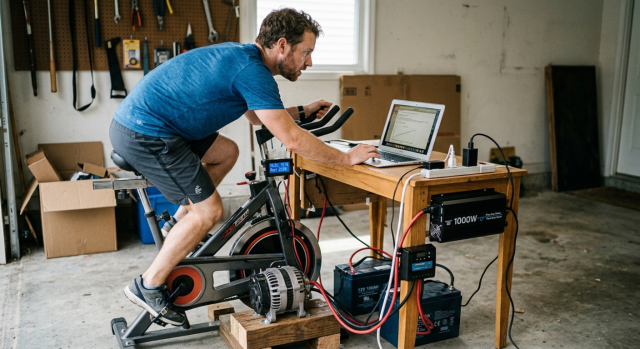
I wasn't planning to come back to this topic so soon, but I guess lots of unexpected things are happening in the world today.
I want to start this topic by acknowledging our previous post on AI as a research tool. I'm acknowledging it because I'm also sharing this document generated by AI. It's a breakdown of reporting and other information regarding the current energy situation in Australia, our publicly disclosed exposures and how things like oil in the Middle East can impact electricity in Australia.
Only a few days ago I jokingly spoke of "business prepping" as a backdrop to work-from-home preparedness. Today I want to get a little more serious. Let's talk about energy scarcity.
The start of 2026 has brought unexpected challenges to our doorstep. With geopolitical tensions in the Middle East disrupting major global energy chokepoints like the Strait of Hormuz, Australia’s energy market is feeling the squeeze. Scrap that - we are all feeling the squeeze.
The physical conflict may be thousands of kilometres away, but the impact on our local electricity prices and fuel stability is very real, leaving many Australian business owners wondering how to keep the lights on - literally. And if you weren't thinking about it - you will now.
I want to start with calling out - this isn't a post about panic buying and silly responses. It's a post about business preparedness. In the enterprise world we spend enormous amounts of effort preparing Business Continuity Plans (BCPs). Let's take some of that thinking and apply it to the Small and Medium Business (SMB) landscape. 9 times out of 10, you don't need a massive corporate budget to build a resilient business; you just need a clear plan.
Minimum Viable Office
Minimum Viable (INSERT NAME HERE). The terminology has become cliche but the thinking is solid. What is the bare minimum I need? If the grid becomes "fragile" due to high wholesale prices or technical instability, the goal isn't necessarily to run everything at 100% capacity. You want your Minimum Viable Office (MVO) - it's the "bare bones" version of your workspace - the absolute minimum amount of equipment and power required to keep your business functional and your data secure.
Working this out starts with a pen and notepad. Walk through your office and ask yourself: if the power went out right now, which three things must stay on to prevent a total shutdown? For most of our clients, this list includes:
- The Network Heart: Your router, firewall, and primary switch. Without these, your team can't access cloud files or communicate with clients.
- Essential Computing: A handful of laptops or a central server.
- Basic Safety: Emergency lighting and security systems.
By focusing your energy resources (like a backup battery, UPS or generator) only on these items, you can extend your "uptime" significantly during a grid outage.
Critical vs. Non-Critical
As I mentioned earlier, in the enterprise world, this is known as Business Continuity Planning (BCP), but for a small business, it’s simply about setting priorities. The Australian Energy Market Operator (AEMO) uses a similar tactic called "load shedding," where they cut power to non-essential industrial users first to keep residential lights on. You can do the same within your own four walls.
Start by categorising your business functions. For example:
| Category | Typical Functions | Energy Action |
|---|---|---|
| Critical | Customer database, VOIP phones, secure Wi-Fi, and payroll systems. | Connect to uninterruptible power supplies (UPS) or backup batteries to maintain "uptime". |
| Important | Printing, secondary monitors, and staff kitchen appliances. | Use only during stable grid periods; disconnect during "Minimum System Load" (MSL) warnings. |
| Non-Critical | Decorative lighting, digital signage, and non-essential HVAC. | Keep turned off to reduce your "load" and lower exposure to wholesale price spikes. |
This split allows you to be surgical. If the government starts enforcing energy restrictions, having this list ready ensures you know exactly where to direct your limited energy.
A quick note on diesel
If you have diesel generators for backup, then I'm preaching to the converted - you probably already have a BCP or are at least thinking along those lines. But given everything that's going on, have you got fule on hand - have you considered your supply chain? If you need your generator the hardest thing to do could be keeping it fulled. If you have reserves, go and check that they're still good. Ensure they're stored safely and rotated regularly.
Planning for an Extended Outage
Trouble in the Middle East isn't the only source of strife we're dealing with. We have also had reporting of "Minimum System Load" warnings, where too much solar output actually makes the grid harder to manage and less reliable.
If we do have to deal with an extended outage, here are the things you can do now to prepare:
- Test Your Backups: Don't wait for a blackout to find out your UPS battery is dead. Perform a monthly "pull-the-plug" test on your MVO equipment.
- Make intelligent use of cloud services: Ensure your critical data is backed up to a secure, off-site cloud. This allows your team to work from home (where they might have their own solar/battery setups) if the main office is down.
- Communication Plan: Have an alternative way to contact your staff and clients. For staff, a simple "emergency" group chat on a mobile platform (like Signal or Threema) that doesn't rely on your office Wi-Fi is essential. For customers who are holding you to SLAs, a printed list of emergency customer contacts and their numbers could be the difference between a friendly heads-up and breach of contract.
What have we done?
I ended up moving forward the purchase of a 1000W lithium ion battery. I've previously explained how I build my business to work anywhere. What started as a next financial year's problem to offer some greater working portability has now become the critical heart of my personal MVO.
Paired with a couple of solar panels, the 1000W battery offers enough power to run two laptops and a Starlink mini for a full business day while also keeping our phones at full charge. For a small business that's dependent on key people - it can be that simple.
Your next steps
Energy scarcity doesn't have to mean business scarcity:
- Identify your Minimum Viable Office,
- Prioritise your critical functions,
- Invest in smart resilience tools where you have gaps, and
- Test your existing resilience measures will work reliably when they're needed.
With a few simple steps, you can protect your bottom line and your peace of mind.
At AFSecure, we specialise in designing secure, resilient networks that stay up when the world around them feels uncertain. If you need it, we're here to help.